5 Things Bitcoin Traders Need to Watch as the Weekly Close Decides the Bull Run
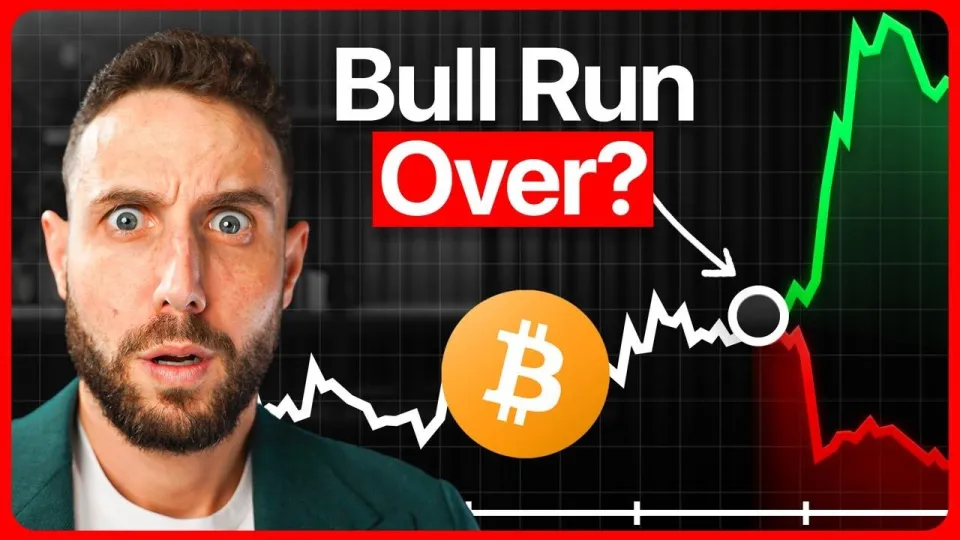
Video: Bitcoin Has 2 DAYS to Save the Crypto Bull Run
You can order the same kind of articles for your own video to boost it on YouTube and Google. Just message the Telegram bot @sat_sit_bot. The bot writes and publishes the articles itself (with your YouTube video embedded) on popular topical websites (no ads). Your first 50 articles are free.
· based on the channel EllioTrades
Bitcoin is trading into a weekly close that decides whether the crypto bull run survives or rolls over into a deeper correction. The working plan is simple: BTC must hold the $97,000 area and reclaim $100,000, otherwise the bullish structure is invalidated and altcoins take the hit first. That binary setup is why traders are lining up levels now rather than after the candle prints — and why tools such as the Kalshi markets linked by EllioTrades are being used to price the outcome.
What the weekly close actually decides for Bitcoin
A weekly close is the only candle that aggregates seven days of spot, futures and liquidation flow, so it is the level market makers defend and the level breakouts are judged against. In this setup the close matters more than any intraday wick: a wick below support that closes back above it keeps the range intact, while a close under support confirms the breakdown.
The framework has two thresholds. First, $97,000 is the sweep low that has to hold; losing it on a weekly basis flips the structure bearish. Second, a reclaim of $100,000 confirms the bull case and opens the door to new highs in November. Anything between those two numbers is noise, and the correct response is to wait rather than front-run the candle.
The exact Bitcoin levels in the trading plan
Every level in the plan has a job, and mixing them up is how traders get stopped out on both sides of the range.
- $97,000 — invalidation. This is the low of the recent sweep. A weekly close beneath it means the bullish structure is broken and the next targets are lower.
- $100,000 — confirmation. Reclaiming six figures on the weekly turns the correction into a higher low and reopens the path to new all-time highs.
- The range between them — no-trade zone. Inside $97,000–$100,000 there is no edge; position sizing should reflect that.
- November — the follow-through window. If $100,000 is reclaimed, the expectation is continuation into November rather than an immediate reversal.
A practical consequence: a trader who wants exposure to the upside does not need to buy the middle of the range. Waiting for the reclaim costs a few percent but removes the scenario where BTC closes under $97,000 and drags every altcoin down with it.
Why altcoins carry the short-side risk
Bitcoin is not where the downside expression sits; altcoins are. The plan singles out NEAR as a short candidate, on the logic that high-beta tokens fall harder when BTC loses support and lag the recovery when it bounces.
The counter-argument is equally concrete: shorting a beaten-down alt near its lows means paying for a move that may already be exhausted, and a single BTC reclaim of $100,000 can squeeze those positions violently. The honest read is that alt shorts are a hedge against the bearish branch of the BTC setup, not an independent trade — they only make sense if $97,000 fails.
On the long side, the plan is to buy altcoins only if support holds, and to size positions so that a weekend gap or a thin order book does not force an exit at the worst price.
The buy-the-dip debate traders keep having
There is a real disagreement about whether a cheaper entry is even desirable. One view holds that a major setback is a gift because it lets you accumulate lower; the other holds that needing a deep retracement is itself bearish, and it is far better to be forced to dollar-cost average higher because that confirms the bull market and raises the probability of larger gains.
Both are consistent, but they imply different behaviour. If you want the bull confirmed, you buy strength above $100,000 and accept a worse average price. If you want a discount, you wait for a flush toward the sweep low and accept that the bull case may be dying while you buy. What does not work is holding both views at once and sizing as if neither risk exists.
The same tension shows up in sentiment: a single retracement has flipped a large part of the crowd from aggressively bullish to bearish. That swing is information about positioning, not about the weekly candle.
Outside catalysts that can override the chart
The chart is not the only variable in this window. A pending MSCI decision on delisting digital asset treasury companies — MSTR being the largest — from global indexes is a genuine catalyst, with an answer expected within days. Index removal would force passive funds to sell, which hits the treasury-company complex and, through it, sentiment toward BTC.
A second structural point: weekend liquidity is thin because market makers step back, so a weekend move toward either threshold can be reversed on Monday. A close that happens on low volume deserves less trust than one printed during the trading week.
Finally, the bear-market-duration argument cuts both ways. A very short bear market tends to produce a weaker subsequent bull, because the excess leverage never fully clears. That does not invalidate the $100,000 reclaim setup, but it argues for taking profit into strength rather than assuming an endless uptrend.
All the links from the breakdown
- Kalshi — trade with a $50 bonus after a $50 deposit: https://kalshi.com/p/elliotrades
- Liquid — 10% off trading fees: https://liquid.trade/r/ellio
- WEEX — deposit $100 and unlock up to $4,000 in bonuses: https://www.weex.com/events/promo/elliotrades-deposit-trade?vipCode=wubo&qrType=activity
- fomo — follow the public trading journey: https://fomo.family/r/elliotrades
- X — https://x.com/elliotrades
Summary
The whole setup reduces to two numbers: BTC holding $97,000 and reclaiming $100,000. Above the second, the bull run continues into November and altcoins are bought on strength; below the first, the structure breaks and alt shorts such as NEAR become the expression of the downside. Everything in between is a waiting game, with the MSCI decision on treasury companies and thin weekend liquidity as the two wildcards. The breakdown of this plan comes from the EllioTrades channel, and the Kalshi sign-up page is where the outcome can be traded with a $50 bonus after a $50 deposit.
Key takeaways
- Bitcoin's weekly candle close is framed as the trigger that decides whether the crypto bull run continues or breaks down.
- The bearish invalidation level sits near $97,000, the sweep low that must hold for the bullish structure to stay intact.
- A reclaim of $100,000 is treated as the signal that opens the path toward new highs in November.
- Short setups are concentrated in altcoins such as NEAR rather than in BTC itself.
- A pending MSCI decision on digital asset treasury companies like MSTR is flagged as an outside catalyst for the same window.
Source: Bitcoin Has 2 DAYS to Save the Crypto Bull Run · Markdown version
Questions & answers
What price does Bitcoin need to close above to keep the bull run alive?
A weekly close above $100,000 is the confirmation level in the plan. It turns the recent correction into a higher low and reopens the path to new highs in November. Between $97,000 and $100,000 there is no clear edge.
What happens if Bitcoin closes below $97,000?
That is the invalidation level — the low of the recent sweep. A weekly close beneath it breaks the bullish structure and shifts the focus to altcoin shorts and lower targets rather than new highs.
Is shorting altcoins like NEAR a good idea here?
Only as a hedge against the bearish branch of the BTC setup. High-beta alts fall harder when Bitcoin loses support, but shorting near lows is exposed to a violent squeeze if BTC reclaims $100,000, so the trade depends entirely on $97,000 failing.
Can the weekly close be trusted if it happens over the weekend?
With caution. Market makers step back on weekends, so liquidity is thin and moves toward either threshold can be reversed when the trading week opens. A close printed on low volume carries less weight than one made during normal hours.